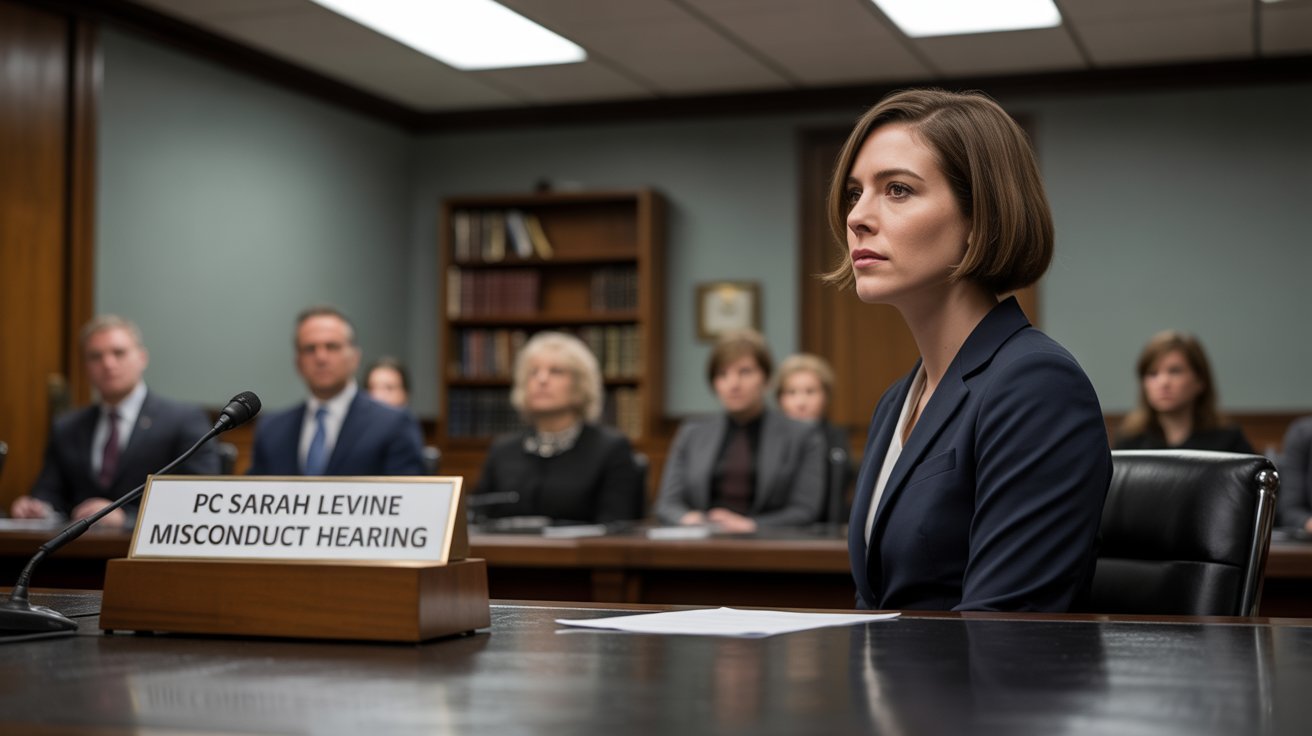
When a police officer faces a misconduct hearing, it stirs public interest, concern, and scrutiny. The case of PC Sarah Levine has drawn attention because it raises critical questions: What exactly is alleged? How is the hearing process conducted? What can the public expect? And ultimately, how do such proceedings impact trust in policing?
While the details are still emerging, this article aims to collect what is known, explain the legal and institutional framework, and explore the broader implications. I will draw on established procedures and comparable cases to help you understand how a misconduct hearing works in practice.
Who is PC Sarah Levine?
Public records and misconduct monitoring sites list PC Sarah Levine as an officer in the Metropolitan Police Service under investigation for misconduct. A LinkedIn post also mentions a misconduct hearing for her, suggesting that formal disciplinary steps are underway.
Beyond those references, there is no widely confirmed public detail about the specific allegations, her service record, or role. Because of the sensitivity of such proceedings, many details remain confidential until formal findings are announced.
In short, she is an active police constable under investigation, but the precise nature of the misconduct is not yet publicly disclosed.
What is a Police Misconduct Hearing?
A misconduct hearing is a formal process within policing institutions to investigate allegations that an officer’s actions breached professional standards. It’s separate from criminal proceedings (unless criminal charges also apply). Its purpose is to determine whether the officer’s behavior was unacceptable, and if so, what sanction is appropriate.
There are typically two broad categories:
-
Misconduct: Less serious breaches, possibly resulting in warnings or retraining.
-
Gross misconduct: Serious violations such as dishonesty, abuse of power, or actions endangering public safety. These may lead to dismissal or bans.
A misconduct hearing is usually run by a disciplinary panel, which may consist of a senior officer, an independent member, and legal or oversight representatives. Evidence is presented, witnesses may be called, and the officer has the right to representation and to challenge the evidence.
The outcome must be fair, transparent, and proportionate.
Legal & Procedural Framework in the UK
In the UK, the Independent Office for Police Conduct (IOPC) often plays a central role in investigating police misconduct. The process generally proceeds as:
-
Complaint or allegation
A complaint is lodged by the public, a colleague, or is referred from internal monitoring. -
Investigation
The IOPC or internal professional standards department investigates. That may include gathering documents, interviewing witnesses, and obtaining records (body cam, communications, etc.) -
Decision to refer to hearing
If the investigation finds sufficient evidence, the matter is escalated to a hearing. -
Hearing
The hearing is conducted, with formal presentation of evidence, defense, cross-examination, deliberation, and decision. -
Sanction or no action
If misconduct is proven, possible outcomes range from written warnings to dismissal or prohibition from policing.
The officer under investigation is granted certain rights: to see allegations in advance, to be represented (e.g. by legal counsel or police associations), to call witnesses, and to appeal the decision in many cases.
To maintain public confidence, hearings may be partially or fully open, though some sensitive parts might be held in private.
This system seeks balance: protection for officers’ rights, while ensuring accountability for misconduct.
Public & Media Interest in Police Hearings
When police officers are involved, especially in high-profile departments like the Metropolitan Police, misconduct hearings attract media and public attention. People want transparency, fairness, and assurance that officers are held to high standards.
However, conflicts arise:
-
Confidentiality vs transparency: Some evidence may be withheld to protect victims or national security.
-
Presumption of innocence: An officer must not be judged in the press before the hearing.
-
Trust and legitimacy: How the process is seen by the public affects confidence in policing.
In the PC Sarah Levine case, limited public disclosures and references on misconduct monitoring sites suggest the process is underway, but many details remain under wraps.
What Is Known About PC Sarah Levine’s Hearing
From the publicly available sources:
-
The listing on a misconduct monitoring platform confirms that PC Sarah Levine is subject to a misconduct process.
-
A LinkedIn post by a user named Errol Baptiste refers to a “misconduct hearing for PC Sarah Levine” connected to the Metropolitan Police.
-
A social media mention states “Misconduct hearing for PC Sarah Levine” referencing Metropolitan Police sources.
These references point to the hearing being real, but they do not tell us:
-
The specific allegations
-
The date or timeline of the hearing
-
Who the panel members are
-
What is at stake or what sanctions might apply
This limited information is typical in early stages of police disciplinary cases.
Possible Outcomes & Precedents
If a hearing finds misconduct or gross misconduct is proven, potential consequences can include:
-
Written or final written warning
-
Reassignment or demotion
-
Dismissal from the force
-
Loss of pension or privileges
-
Bar from future policing roles
Several past cases set precedents. For example, in other misconduct hearings, officers have been dismissed for gross misconduct related to misuse of power, data breaches, or serious dishonesty.
Because we do not know the precise nature of PC Sarah Levine’s alleged misconduct, we can only say that her case could result in any of these sanctions, depending on severity and mitigating factors.
Challenges & Criticisms in the System
While misconduct hearings are necessary, the system faces many criticisms:
-
Transparency
Many hearings are held behind closed doors, limiting what the public sees. This lack of visibility can erode confidence. -
Delays
Investigations and hearings may take months or even years, leaving uncertainty for all parties. -
Officer protections
Legal complexity and internal culture can sometimes shield wrongdoing or slow accountability. -
Resource constraints
Investigative bodies and police internal departments may lack sufficient staff or funding, causing backlog and delay. -
Public perception of bias
When panels include serving officers or people connected to the force, there may be perceptions of partiality.
A well-run hearing must address these challenges through fairness, clarity of procedure, and accountability.
Lessons & Broader Implications
The PC Sarah Levine case — once resolved — will contribute to how police misconduct is perceived in the UK. Key lessons include:
-
The importance of prompt, transparent investigations
-
The need to protect both complainant and officer rights
-
The role of independent oversight
-
How such cases affect public trust in policing
-
The necessity of reform and safeguards to reduce misconduct
If serious misconduct is proven and the sanction is proportionate and transparent, it can strengthen accountability and trust. If the process is opaque or outcome uncertain, public cynicism may grow.
Conclusion
The misconduct hearing for PC Sarah Levine is underway in the Metropolitan Police, but many details are still confidential. What is clear is the importance of understanding how these hearings function, what rights officers have, and what outcomes are possible.
While we wait for definitive findings, this case is a window into broader questions about policing fairness, oversight, and public confidence. The manner in which it is handled — fairly, transparently, and responsibly — will matter not just for Sarah Levine, but for how policing is viewed in the UK.
FAQs
Q1: Are police misconduct hearings public?
Sometimes. Portions may be public, especially when transparency is a priority, but sensitive sections may be closed.
Q2: What’s the difference between misconduct and gross misconduct?
Misconduct is a breach of standards with less serious consequences; gross misconduct is more serious and may result in dismissal or bans.
Q3: What rights does an officer have during a hearing?
They have the right to see the allegations, present a defense, call witnesses, be represented, and appeal decisions.
Q4: Can the public access hearing outcomes?
Yes — usually the final decision or summary findings are published, though full details may stay restricted.
Q5: How long do such hearings take?
It varies. It can take many months from investigation to hearing to final decision, depending on complexity.